
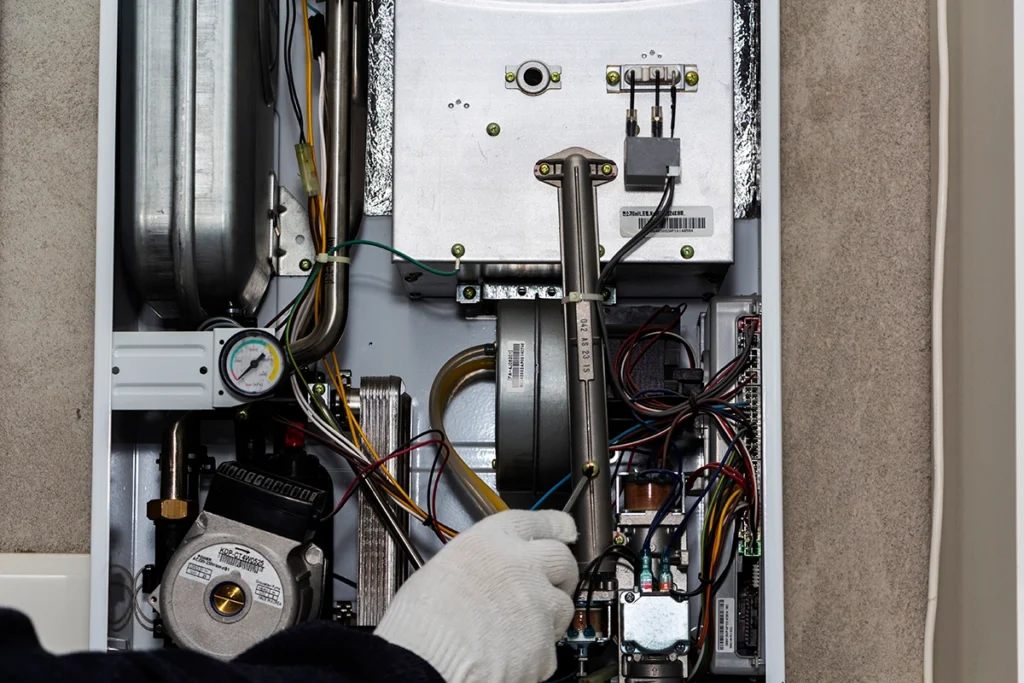
A furnace secondary heat exchanger cracked in Oswego NY is rarely the beginning of the problem. It’s almost always the end result of something else going wrong first. The secondary heat exchanger sits downstream in your condensing furnace and handles cooler combustion gases. Cracks typically develop when the unit runs too hot, condensate can’t drain properly, or the furnace cycles on and off more than it should. That cracking isn’t just a part wearing out on its own. It’s a sign that an upstream issue has been stressing the metal until it failed. These issues often relate to airflow, drainage, burner operation, or venting. If you replace only the exchanger without addressing what caused the damage, the new part will likely crack again. You may face even bigger repairs down the road.
Why Your Furnace Secondary Heat Exchanger Cracked
A cracked secondary heat exchanger is almost never the real problem. It’s the symptom of something upstream that has been damaging your furnace over time. The secondary heat exchanger is designed to extract heat from combustion gases before they exit your home. Heat exchangers should last 10-15 years or more with good maintenance. When one cracks years early, another part of the system has been forcing it to work under destructive conditions.
The Consumer Product Safety Commission warns that cracked heat exchangers can allow dangerous carbon monoxide to leak into your home’s living spaces.
The most common upstream causes we see include chronic condensate drainage problems. Restricted airflow from dirty filters or blocked return vents also plays a role. Corrosion from acidic condensate that never drained properly is another culprit. When condensate (the moisture produced during combustion) backs up or pools inside the exchanger, it eats away at the metal over time. Airflow restrictions force the exchanger to overheat repeatedly. This creates thermal stress that eventually cracks the metal.
In some cases, an oversized or improperly vented furnace creates pressure imbalances that accelerate wear. We also find cracks tied to burner flame problems. When flames burn unevenly or too hot, they concentrate heat in small areas and weaken the metal.
If you replace the cracked heat exchanger without diagnosing why it failed, the new part will face the same destructive conditions. It will fail again. When we respond to a cracked secondary heat exchanger in Oswego, we inspect the entire combustion system. We check drainage pathways, airflow, and venting to identify and correct the root cause before any parts are replaced.
Common Causes Behind a Cracked Secondary Heat Exchanger
A cracked secondary heat exchanger in your Oswego furnace is almost never a standalone problem. It’s typically the result of an underlying issue. That issue created too much stress on the metal over time. When we respond to these calls, we look for the root cause first. Replacing the part without addressing what damaged it sets you up for another failure. Understanding the most common causes helps you recognize when your furnace is working harder than it should. It also tells you when a professional inspection is overdue.
Airflow Restrictions and Blocked Returns
Restricted airflow is one of the leading causes of secondary heat exchanger cracks. When your filter is clogged, return vents are blocked, or ductwork is crimped, problems start. Your furnace can’t pull enough air across the heat exchangers to cool them properly. The metal overheats, expands, and contracts unevenly with every heating cycle. Eventually it fatigues and cracks. We frequently find filters that haven’t been changed in months. Furniture blocking return grilles is another common culprit. Both force the system to overheat repeatedly.
Condensate Drain Clogs and Moisture Damage
High-efficiency furnaces produce condensation. If the drain line clogs, acidic water backs up and pools inside the cabinet. That standing water corrodes the secondary heat exchanger. The secondary is the cooler component where condensation naturally forms. Corrosion accelerates rust and creates weak points that crack under thermal stress. A blocked condensate drain also triggers flame-rollout or pressure-switch errors. This forces the furnace to cycle on and off more often than it should.
Oversized Systems and Short Cycling
An oversized furnace heats your home too quickly, shuts off, then fires up again minutes later. This pattern is called short cycling. Each ignition stresses the heat exchanger with rapid temperature swings. Over hundreds of cycles the metal fatigues. We often see cracked secondary heat exchangers in systems that were never properly sized. A licensed professional must size the system with a load calculation based on the home’s layout. This is especially important in homes with updated insulation or replaced windows since the original install.
What Happens If You Only Replace the Part
If you replace a cracked secondary heat exchanger without identifying why it cracked, the new part will usually fail just as quickly. The heat exchanger is built to last the life of the furnace under normal conditions. It cracks because something in the system forced it to overheat, corrode, or flex beyond its design limits. Installing a fresh exchanger into the same hostile environment means the same stress will go to work immediately. You’ll be looking at another crack within weeks or months.
Common consequences include rapid re-cracking from the same combustion or airflow problem. Soot buildup and flame rollout occur if the burner assembly wasn’t addressed. Premature corrosion happens if condensate drainage is still restricted. In some cases, the underlying issue will damage other components while the new exchanger is failing. An over-firing gas valve or a blower running at the wrong speed can turn a single-part problem into a cascade of repairs.
You may also face repeated problems if the original cause wasn’t documented and corrected. That means paying for the same work twice.
Why a Full System Check Protects Your Investment
When we respond to a furnace secondary heat exchanger crack in Oswego NY, our licensed technicians perform a complete diagnostic before quoting any repair. We measure airflow across the coil. We inspect the condensate system for blockages. We test gas pressure and flame characteristics. We check the blower wheel and motor for wear. We confirm that the venting is sized and sealed correctly.
Only after we’ve pinpointed the root cause do we discuss whether repair or replacement makes sense. That process protects you from repeat failures. It ensures every dollar you spend goes toward a lasting solution, not a temporary patch.
Schedule a Furnace Inspection in Oswego NY
A cracked secondary heat exchanger isn’t something you can ignore or repair yourself. It’s a symptom of a deeper problem in your furnace system. Replacing the part without fixing the underlying cause means you’ll face the same failure again, often within months. Our team at Syracuse Heating & Cooling will perform a complete diagnostic inspection. We identify not just the crack itself, but why it happened in the first place. We check airflow balance, blower operation, condensate drainage, gas pressure, and venting integrity. We inspect every other component that could have contributed to the failure. That thorough approach protects your investment and prevents repeat breakdowns.
When you call us, we’ll schedule a convenient time to inspect your furnace. You’ll know exactly what the repair involves and what caused the heat exchanger to crack. We’ll explain what we’ll do to make sure the new component lasts. We’re licensed, insured, and available around the clock for emergency service. Whether you’re dealing with a complete furnace shutdown or catching a problem early, we’re ready to help.
Handling this repair the right way now protects you over the long term. You avoid repeat failures, restore safe and efficient heating, and extend the life of your entire system.
Contact Syracuse Heating & Cooling today to schedule your furnace inspection in Oswego and get your heating system back on solid ground.
Frequently Asked Questions
What causes a furnace secondary heat exchanger to crack?
A furnace secondary heat exchanger cracks when upstream problems create destructive conditions, usually restricted airflow from dirty filters or blocked vents, condensate drainage clogs that allow acidic moisture to corrode the metal, or short cycling from an oversized system. The exchanger itself rarely fails on its own; it cracks because another component forced it to overheat or corrode.
Can I just replace the cracked secondary heat exchanger without finding the cause?
Replacing only the cracked secondary heat exchanger without diagnosing the root cause means the new part will likely fail again within weeks or months. The same airflow restriction, drainage problem, or burner issue that damaged the first exchanger will immediately attack the replacement. We always identify and correct the underlying cause first.
Is a cracked secondary heat exchanger dangerous to operate?
Yes, operating a furnace with a cracked secondary heat exchanger is dangerous because combustion gases, including carbon monoxide, can leak into your home’s air instead of venting outside. You should shut the system off immediately and call a licensed technician. Our team offers emergency service around the clock to diagnose and address safety issues.
How do I know if my furnace secondary heat exchanger cracked in Oswego NY?
Common warning signs include soot buildup around the burner compartment, yellow or wavering flames instead of steady blue ones, condensation or rust inside the cabinet, persistent error codes, or a faint chemical odor near the furnace. Because cracks aren’t always visible, a licensed technician uses specialized inspection tools to confirm the crack and identify what caused it.
Dave s an experienced HVAC writer for Syracuse Heating & Cooling, covering heating, air conditioning, indoor air quality, system maintenance, troubleshooting, and energy efficiency. He specializes in turning complex HVAC topics into straightforward, practical advice that helps Central New York homeowners make smarter decisions about their comfort systems.
Dave s an experienced HVAC writer for Syracuse Heating & Cooling, covering heating, air conditioning, indoor air quality, system maintenance, troubleshooting, and energy efficiency. He specializes in turning complex HVAC topics into straightforward, practical advice that helps Central New York homeowners make smarter decisions about their comfort systems.