
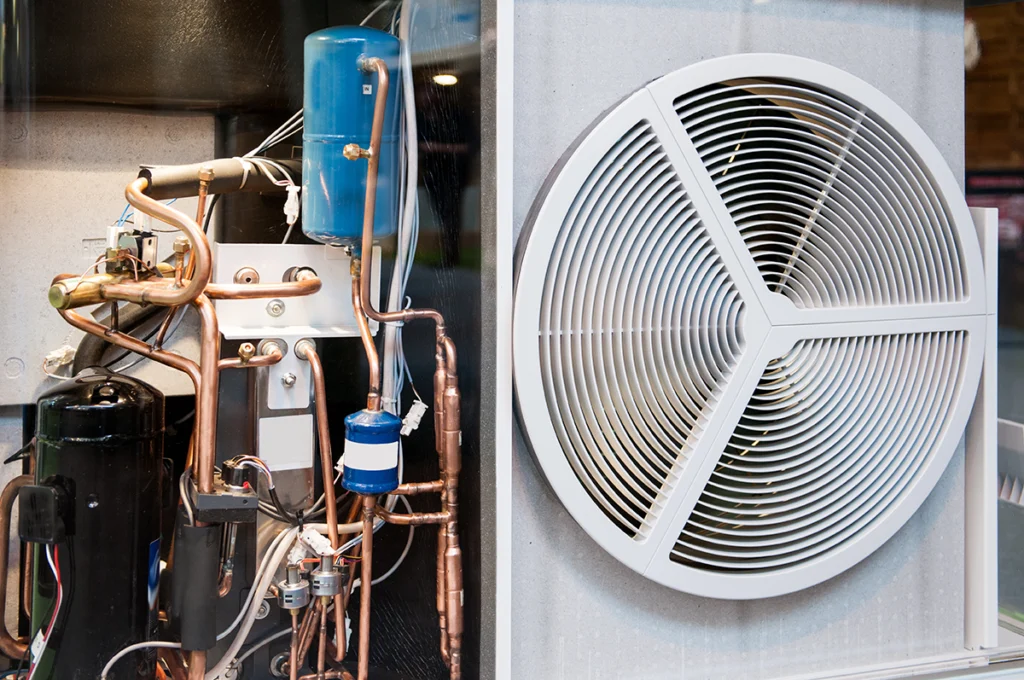
When an HVAC compressor fails, the breakdown is almost never caused by the compressor itself. It’s usually the result of an underlying problem that put too much stress on the component. An HVAC compressor is the heart of your air conditioning or heat pump system. At Syracuse Heating & Cooling, we see far too many homeowners call for a compressor replacement only to have the new one fail weeks or months later. This happens because the root cause was never addressed. Electrical issues, restricted airflow, refrigerant problems, and improper installation are the most common culprits. These issues quietly damage the compressor over time. That’s why we always diagnose why a compressor failed before recommending any repair. This ensures the real problem gets fixed and your system runs reliably for years to come.
What Is an HVAC Compressor?
Your HVAC compressor is the engine that powers the cooling side of your system. When your thermostat calls for cooling, the compressor compresses refrigerant to raise its temperature and pressure before passing it to the condenser coil. That pressurized refrigerant flows through your outdoor unit, then returns indoors where it absorbs heat from your home and carries it outside. Without a working compressor, the refrigerant never moves and your system can’t cool.
The compressor sits inside your outdoor unit, the large metal cabinet beside or behind your home. It’s a sealed component, typically about the size of a soccer ball. It runs whenever your air conditioner or heat pump is in cooling mode. Because it operates under high pressure and temperature every single time the system cycles on, the compressor works harder than almost any other part in your HVAC system.
When a compressor begins to fail, you’ll usually notice symptoms before it stops completely. The outdoor unit may hum or click without starting. The system may run but blow warm air, or you might hear grinding or rattling from the cabinet. We see homeowners treat these warning signs as minor annoyances, only to face a complete breakdown on the hottest day of the year. That’s why we inspect the compressor and the systems around it, electrical supply, refrigerant charge, airflow, to catch problems early and keep your cooling reliable.
How Does an HVAC Compressor Fail?
Compressors rarely fail without warning. In fact, most send clear signals days or even weeks before they quit completely. You might hear loud banging, grinding, or clicking noises when the outdoor unit tries to start. The system may cycle on and off every few minutes instead of running normally. You could notice warmer air from your vents even though the thermostat is calling for cooling, or ice forming on the refrigerant lines outside. These symptoms tell us something is forcing the compressor to work harder than it should.
Another common warning is a tripped circuit breaker that resets but trips again within hours. That pattern usually means the compressor is drawing too much current because of internal wear or an electrical fault. Some homeowners also report a burning smell near the outdoor unit or unusually high energy bills before the system stops working altogether.
When we respond to a call about these symptoms, we measure electrical draw, refrigerant pressures, and temperature differentials to pinpoint what’s stressing the compressor. Catching the problem at the warning-sign stage often prevents a total failure and gives you more repair options. If you notice any of these signs, turn the system off and contact us right away to prevent further damage.
What Causes Compressor Damage?
Most homeowners assume the compressor simply wore out. However, the compressor usually fails because something else went wrong first. A compressor is built to last many years under normal conditions. When one breaks down early, it’s almost always responding to an upstream problem. That problem forced it to work beyond its design limits. Replacing the compressor without finding that root cause means the new part will likely fail again. Often it happens within months, leaving you with the same repair bill all over again.
The Most Common Upstream Causes
Electrical supply problems can overheat the compressor windings or prevent the motor from starting cleanly. These include voltage spikes, brownouts, or a failing start component. The damage builds up over time. Restricted airflow forces your system to run longer and hotter. It bakes the compressor from the outside in. Common airflow problems include a clogged filter, blocked outdoor coil, or failing blower motor.
Refrigerant leaks create low-pressure conditions. Those conditions let liquid refrigerant flood back into the compressor. The liquid washes away the oil film that protects moving parts. This leads to catastrophic mechanical failure. Dirty condenser coils and blocked drain lines that back water into the system also cause problems. Improper installation issues include incorrect refrigerant charge or mis-sized ductwork. All of these push the compressor into operating ranges it was never designed for.
When we respond to a compressor failure, we don’t simply swap the part. Instead, we test electrical supply and components. We measure refrigerant pressures and superheat. Superheat is the temperature gap that tells us whether liquid is reaching the compressor. We inspect the outdoor coil and airflow path. We check the system’s installation history. Only after we’ve identified and corrected the root cause do we recommend a replacement compressor. In many cases, we recommend a full system replacement if multiple upstream problems exist. That diagnostic step keeps your new equipment running for its full expected lifespan.
Why Replacing Only the Compressor Often Fails
Common triggers include a failing electrical start component that forces the motor to draw excessive current. A clogged filter-drier can starve the compressor of refrigerant flow, while dirty coils cause the system to overheat. A refrigerant leak can leave the compressor running without enough oil circulation, grinding metal on metal until it seizes. When only the part is swapped, these conditions remain in place, and the cycle repeats. You’ve paid for the part twice, plus the labor, and you’re still without reliable cooling or heating.
We perform a full system diagnostic before recommending any compressor replacement. We test electrical components, measure refrigerant charge and pressures, inspect the coils and airflow path, and check for contamination in the refrigerant lines. That way, you’re investing in a repair that actually lasts, not just replacing the symptom while the real problem quietly destroys your new equipment.
When to Call Syracuse Heating & Cooling
If your outdoor unit is running but not cooling, making grinding or clicking sounds, cycling on and off every few minutes, or shutting down on hot days, your compressor is under stress. The problem will only get worse. The moment you notice your system struggling, call us. Warning signs include weak airflow, warm air from the vents, or a breaker that keeps tripping. Waiting turns a repairable issue into a full system failure. Running a damaged compressor can overheat other components or damage the refrigerant circuit.
We’re a trusted name in Syracuse. Our licensed technicians have seen every compressor failure scenario. When you reach out, we’ll guide you through what’s happening. We’ll schedule an inspection that finds the real cause, not just the symptom. We offer 24/7 emergency service when your comfort can’t wait and a satisfaction guarantee that backs every repair.
Contact Syracuse Heating & Cooling today for expert guidance on your HVAC compressor concern. Let us point you in the right direction, whether that’s a targeted repair, a system upgrade, or simply peace of mind.
Frequently Asked Questions
Can I replace just the HVAC compressor, or do I need a new system?
A licensed technician can replace just the compressor if they identify and fix the root cause first. We’ve seen new compressors fail within weeks because the electrical fault, refrigerant leak, or airflow restriction was never corrected. We perform a full diagnostic to determine whether compressor replacement makes sense or whether system damage points toward full replacement.
How long does an HVAC compressor last?
A compressor typically lasts ten to fifteen years under normal conditions. However, lifespan depends on maintenance and whether upstream problems develop. Dirty filters, refrigerant leaks, electrical faults, and restricted airflow all shorten compressor life dramatically. We recommend annual professional maintenance to catch issues early and help your compressor reach its full expected service life.
What happens if I keep running my AC with a failing compressor?
Running your system with a failing compressor will overheat other components, damage the refrigerant circuit, and often destroy the new compressor you’ll eventually install. You’ll also see skyrocketing energy bills as the struggling unit runs longer without cooling. Turn the system off when you notice grinding, warm air, or frequent cycling, then contact Syracuse Heating & Cooling immediately.
Why does my outdoor unit hum but not start?
That humming sound means the compressor motor is trying to start but can’t turn over. This is usually because of a failed electrical start component or internal mechanical seizure. A technician can test the electrical components, measure electrical draw, and inspect the compressor to diagnose and restore your cooling safely. Contact Syracuse Heating & Cooling so we can identify the issue and get your system running again.

Dave s an experienced HVAC writer for Syracuse Heating & Cooling, covering heating, air conditioning, indoor air quality, system maintenance, troubleshooting, and energy efficiency. He specializes in turning complex HVAC topics into straightforward, practical advice that helps Central New York homeowners make smarter decisions about their comfort systems.